CBD in Spain is under new legal scrutiny after a recent Supreme Court ruling on CBD, CBG, and hemp flowers. Several headlines have presented the decision as if CBD had been broadly banned. However, that interpretation is too simplistic.
For anyone following CBD in Spain, the ruling matters because it affects how hemp flowers, THC traces, and cannabinoid products may be assessed in a legal context.
Although the ruling is relevant and should be taken seriously, it does not amount to a total ban on CBD, CBG, or industrial hemp. Instead, the Supreme Court analyzed a specific case involving plant-based cannabis products containing THC and intended for consumption or distribution to third parties.
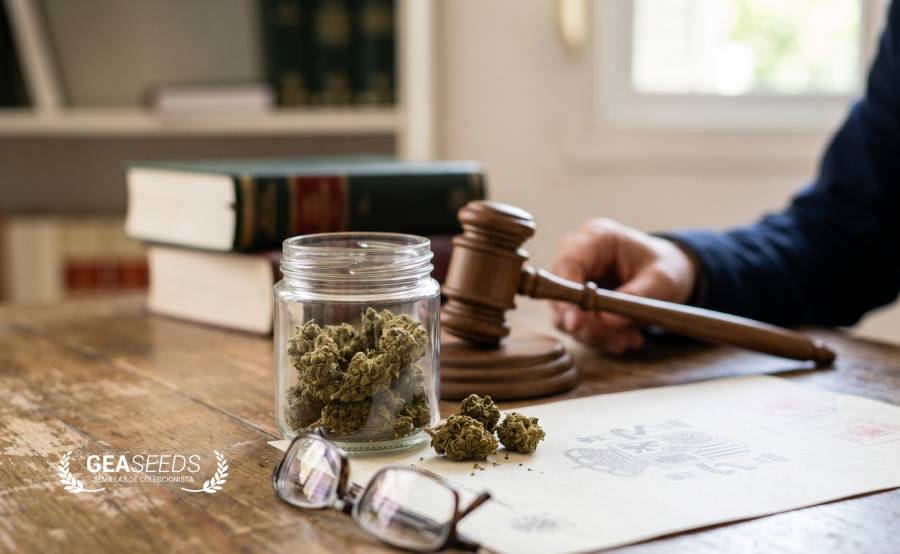
In this article, we explain what the ruling actually says, which products may be most affected, and why it is important to avoid both alarmism and unclear commercial messaging.
Quick summary
- It is not a new law: it is a Supreme Court ruling applied to a specific case.
- It does not ban all CBD or all CBG: the analysis depends on the product, its composition, presentation, and commercial purpose.
- The critical point is THC: especially when the product contains THC and is marketed for consumption.
- Hemp flowers, buds, cigarettes, or hemp cigars are among the most sensitive formats.
- The industry must act with caution: laboratory testing, clear labeling, traceability, and specialized legal advice are essential.
CBD in Spain: which ruling are we talking about?
The ruling that has sparked the debate is Criminal Judgment 301/2026 of the Spanish Supreme Court, Criminal Chamber, dated April 23, 2026, identified as ROJ STS 1993/2026 and ECLI ES:TS:2026:1993.
Specifically, the case concerned the sale of plant-based cannabis products, including cigarettes, hemp cigars, small bags, and buds, containing cannabinoids such as CBD, CBG, and THC.
According to the Supreme Court, although CBD is not psychoactive in the same way as THC, certain products containing CBD may still fall within a criminal-law analysis if they also contain THC, are presented in formats intended for consumption, and are commercially distributed to third parties.
The key issue is not simply whether a product contains CBD or CBG, but what the final product contains, how it is presented, what it is marketed for, and whether THC is present.
CBD in Spain is not automatically banned
One of the most problematic interpretations of this ruling is reducing it to an overly simple statement: “CBD is banned.” However, that reading is not accurate.
The ruling does not create a new law for the entire CBD market. Nor does it state that any product containing cannabidiol is automatically illegal. Instead, it assesses a specific case involving plant-based cannabis products marketed in formats associated with consumption, containing THC, and distributed commercially.
Therefore, the most cautious reading is this: the ruling increases the legal risk for certain plant-based cannabis products containing THC, especially if they are sold as flowers, buds, cigarettes, hemp cigars, infusions, or products intended directly or indirectly for consumption.
For this reason, any serious analysis of CBD in Spain must separate legal risk from an actual nationwide prohibition.
If you want to learn more about cannabidiol itself, you can also read our article on what CBD, or cannabidiol, is, keeping in mind that the current legal context requires a more cautious reading than in previous years.
A relevant ruling, but not an automatic ban
Another important point about CBD in Spain is that this decision should not, by itself, be interpreted as an automatic general rule for the entire industry. It is a highly relevant Supreme Court ruling, but its application will depend on the specific circumstances of each case.
As a result, each product must be analyzed individually: composition, THC content, format, labeling, declared use, and method of commercialization.
In other words, the ruling increases legal uncertainty for certain hemp and CBD products. However, it does not automatically make every product related to CBD, CBG, or industrial hemp illegal.
CBD, CBG, and THC: three concepts that should not be confused
Public debate often groups everything under the word “cannabis.” However, from a technical and legal standpoint, it is important to distinguish between cannabinoids and product types.
- THC: the main psychoactive cannabinoid in cannabis and a controlled substance.
- CBD: not considered psychoactive in the same sense as THC, although its commercial use depends on the type of product and the applicable regulations.
- CBG: another cannabinoid distinct from THC, although it must also be assessed based on its origin, purity, THC presence, format, and declared use.
Therefore, the issue is not only the name of the cannabinoid. The issue is the final product. A seed, a properly notified cosmetic product, an industrial raw material, a dried flower, an extract, an infusion, a food oil, or a product presented as ornamental are not the same thing.
At this point, it is also important to clearly understand the role of THC, or tetrahydrocannabinol, since it is the cannabinoid at the center of much of the legal and health-related debate.
What the Supreme Court actually considered
The ruling does not simply state that any hemp-derived product is a drug. Instead, its analysis relies on several combined factors:
- The presence of plant-based cannabis products.
- The presence of THC in the analyzed samples.
- The total net amount of THC.
- The commercial presentation of the product.
- The product’s destination to third parties.
- The purpose of distribution or trafficking.
- The comparison with the minimum psychoactive dose used in case law.
Why THC amount matters
This last point is especially delicate. The ruling mentions the case-law reference of 10 mg of THC as a minimum psychoactive dose. The issue for the industry is that the analysis is not limited only to the THC percentage, but may also consider the total amount of THC present in the seized product as a whole.
As a result, products with low THC percentages could enter a higher-risk zone if they are presented in individual consumption formats and, by accumulation, exceed that threshold. For this reason, total weight, commercial format, and product presentation become especially important factors.
CBD in Spain: what happens with CBD or CBG flowers?
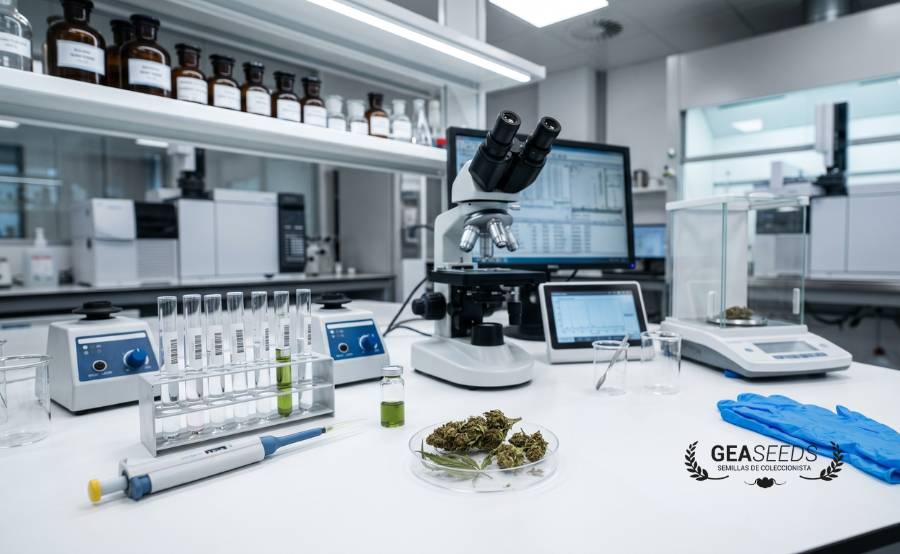
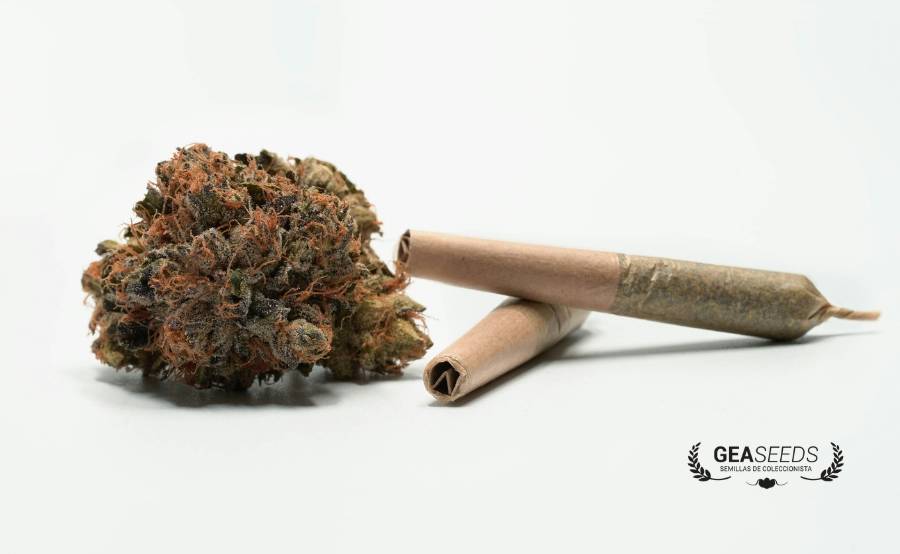
CBD or CBG flowers are one of the most sensitive points. Even if they come from industrial hemp and have a low THC content, marketing them as dried flower, buds, smokable products, or products for consumption may create more legal risk than other formats.
In the debate around CBD in Spain, hemp flowers are especially important because their legal assessment may depend not only on THC percentage, but also on format, presentation, and intended use.
The reason is that the flowers or flowering tops of the cannabis plant have a particularly sensitive legal treatment. In addition, if the product contains THC, even in small amounts, the analysis may no longer focus only on CBD or CBG. Instead, it may consider the overall composition of the product.
In cannabis flowers, a large part of the cannabinoids and aromatic compounds are concentrated in microscopic structures of the plant. If you want to explore that botanical side in more depth, you can read our article on cannabis trichomes.
Key questions for companies
In practical terms, it is not enough for a company in the industry to say “this is legal CBD.” Therefore, it must be able to answer much more specific questions:
- Which part of the plant is being marketed?
- Does it contain THC? At what percentage and in what total net amount?
- Is there a recent and traceable laboratory analysis?
- How is the product presented to consumers?
- Does it suggest human consumption, inhalation, or ingestion?
- Is the labeling consistent with the applicable regulations?
- Does the product have authorization if it belongs to a regulated category?
Food, cosmetics, technical use, and collecting: not the same thing
One of the most common mistakes is talking about “legal CBD” or “illegal CBD” without distinguishing the product category. In practice, however, legality depends on use, composition, and the applicable regulatory framework.
| Type of product | Key point |
|---|---|
| CBD/CBG flowers or buds | Higher risk if they contain THC and are presented for consumption. |
| Food products with CBD | CBD is considered a novel food and requires specific authorization in the European Union. |
| Cosmetics with CBD | They must comply with their specific regulations, notification requirements, safety standards, and permitted claims. |
| Industrial hemp | It must comply with authorized varieties, permitted uses, and THC limits. |
| Cannabis seeds | They should not be confused with flowers, extracts, or products intended for consumption. |
In addition, this distinction between categories is important when discussing new cannabinoids or derivatives.
CBD in Spain: what AESAN says about food products
To complete the analysis of CBD in Spain, it is also important to turn to official sources. The Spanish Agency for Food Safety and Nutrition, AESAN, maintains a clear position on the use of CBD and cannabinoids in food.
According to AESAN, CBD used as such or added to an oil is considered a novel food. This means that its commercialization in food requires authorization under European novel food regulations.
In addition, AESAN distinguishes between controlled and non-controlled parts of the plant. Flowering or fruiting tops, meaning cannabis buds, are considered controlled parts. Seeds and leaves not attached to the flowering tops, however, may be treated differently when they come from varieties cultivated for industrial purposes and meet the applicable requirements.
This distinction is essential: not everything derived from Cannabis sativa L. has the same legal treatment, and not every use is allowed simply because the product is described as industrial hemp.
Does the ruling affect industrial hemp?
It may affect it indirectly, but it does not eliminate or generally prohibit industrial hemp.
Nevertheless, industrial hemp remains a recognized crop within the European agricultural framework, provided that authorized varieties, permitted uses, and applicable THC limits are respected.
However, this ruling reinforces an important distinction: growing industrial hemp does not automatically mean that flowers, buds, or consumer products derived from the plant can be marketed freely.
For this reason, CBD in Spain must be understood within the broader difference between industrial cultivation, plant parts, product categories, and commercial claims.
The European debate on hemp is still open
The ruling should also be understood within a broader European context. For years, the European Union has been debating how to harmonize the treatment of industrial hemp, its plant parts, and products with low THC content.
However, this does not mean that hemp flowers are automatically legal in Spain. Nor does it remove the need to comply with applicable national regulations. Instead, it shows that the European regulatory debate is moving toward greater harmonization, while the Spanish ruling introduces a restrictive criterion that may increase legal uncertainty for the industry.
To compare this scenario with other European models, you can also read our analysis of cannabis regulation in Germany, where it is clear that each country is approaching cannabis from very different perspectives.
CBD in Spain: what actually changes?
The ruling should not be read as the end of CBD, but it should not be ignored either. Overall, its main impact is that it reinforces a stricter interpretation regarding plant-based cannabis products containing THC when they are intended for trafficking or commercial sale.
In practice, this means:
- More risk for CBD or CBG flowers, buds, and smokable products.
- Greater importance of laboratory testing.
- More scrutiny of labeling and commercial presentation.
- A greater need to distinguish between industrial hemp, seeds, flowers, cosmetics, foods, and extracts.
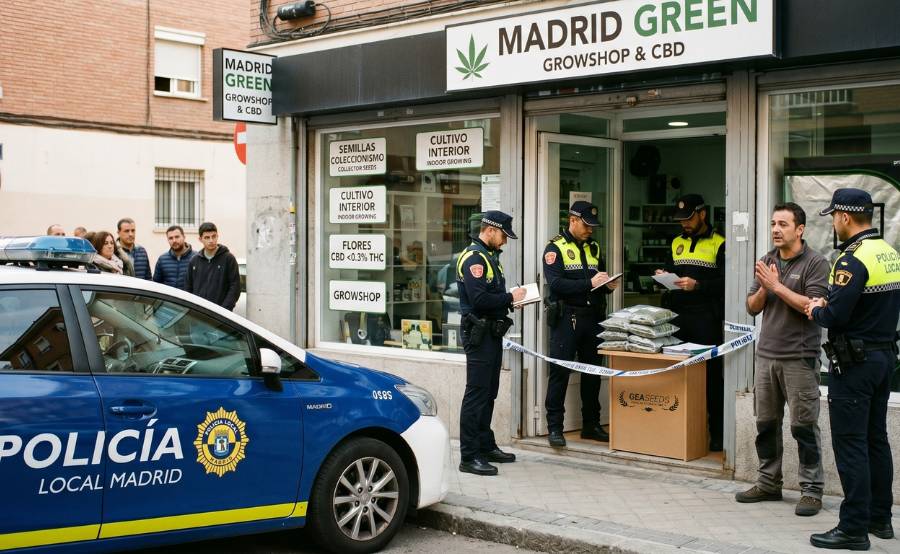
- More caution for shops, seed banks, distributors, and brands in the industry.
For a broader view of the national context, you can complement this reading with our article on the current situation of marijuana in Spain.
Best practices for companies in the cannabis industry
For any company connected to hemp, seeds, CBD, CBG, or cannabis-derived products, the recommendation is not to act out of fear, but with precision.
For brands, shops, and professionals, the current situation of CBD in Spain requires careful wording, proper documentation, and a clear distinction between product categories.
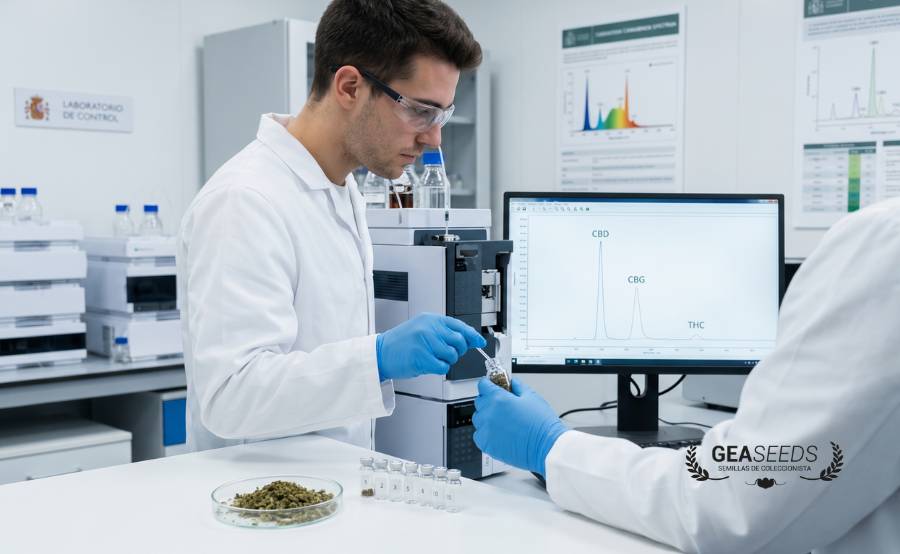
- Always work with up-to-date laboratory analyses.
- Keep documentation on origin, traceability, and composition.
- Avoid claims such as “100% legal” if the product falls within a disputed regulatory area.
- Do not suggest human consumption, inhalation, or ingestion if the product is not authorized for that purpose.
- Clearly distinguish between seeds, flowers, cosmetics, foods, extracts, and technical products.
- Review product sheets, labels, SEO content, and commercial communications.
- Consult specialized lawyers before marketing flowers, extracts, or products containing cannabinoids.
What brands in the industry need to understand
Supreme Court Judgment 301/2026 sends an important warning to Spain’s cannabis industry: it is not enough to talk about CBD, CBG, or industrial hemp in general terms. Each product must be analyzed according to its composition, presentation, declared use, possible THC content, and the format in which it is marketed.
As a result, the current scenario requires greater rigor. Companies working with cannabis, hemp, or cannabinoids must be especially careful with their commercial messaging, product sheets, analyses, and documentation.
At the same time, this ruling does not fully close the legal debate around CBD or industrial hemp. Its interpretation will have to coexist with European regulations, future court decisions, and the industry’s regulatory evolution.
Responsible communication around CBD in Spain
For that reason, the most responsible message about CBD in Spain is not to claim that CBD or CBG has been banned, but to understand that certain plant-based products containing THC, especially when presented for consumption, may fall into a higher legal-risk area.
Finally, at Gea Seeds, we will continue to monitor the legal evolution of the cannabis industry, with a commitment to serious, responsible communication based on verified sources.
Sources and legal notice
Official sources and references used to prepare this article.
- Spanish Supreme Court / CENDOJ: Criminal Judgment 301/2026, ROJ STS 1993/2026, ECLI ES:TS:2026:1993. It can be located in the official search engine of Spain’s General Council of the Judiciary by entering these search details. Search CENDOJ.
Legal notice: This article is for informational purposes only and does not constitute legal advice. Regulations on cannabis, hemp, CBD, CBG, THC, and other cannabinoids may vary depending on the type of product, its composition, labeling, declared use, commercial purpose, and regulatory category. For business or legal decisions, consult a specialized attorney.