Cannabis legal in Germany marks one of the most significant regulatory changes in Europe in recent decades. The entry into force of Germany’s new cannabis law marks one of the most significant regulatory milestones in Europe in recent decades. Since April 2024, the country has allowed adult cannabis consumption under a partial, controlled, and progressive legal framework, breaking with the traditional prohibitionist approach and opening a new chapter in European drug policy.
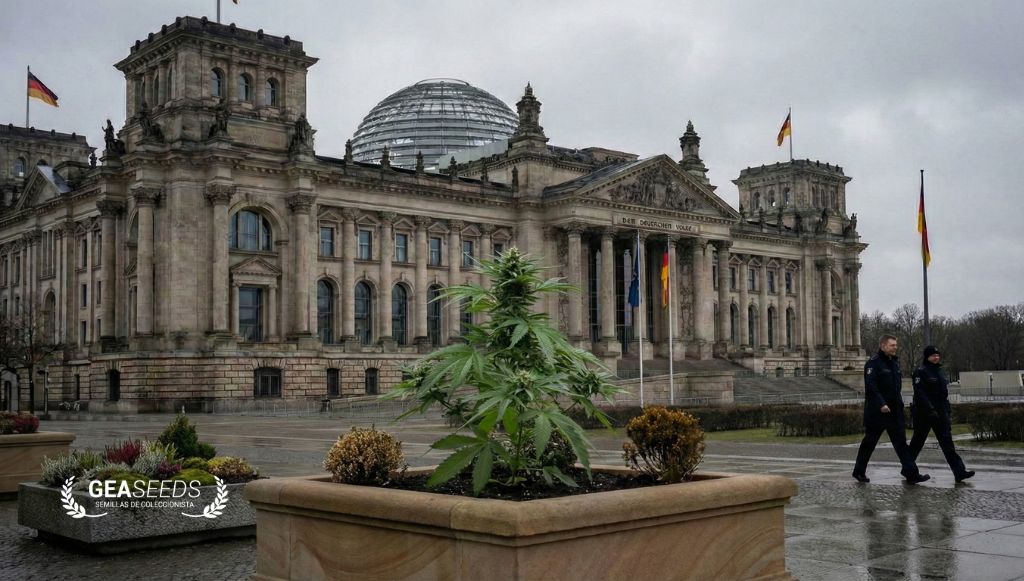
This is not a full legalization nor a free commercial market, but rather a system designed to reduce risks, combat the illegal market, and protect public health. Even so, the political, social, and economic impact of this decision goes far beyond Germany’s borders, especially when compared with the legal status of cannabis in Spain.
What does cannabis legal in Germany actually allow?
German legislation introduces a partial legalization of recreational cannabis for adults. This means that certain actions are no longer considered criminal offenses, provided that very specific legal limits are respected.
Key changes include limited possession for personal use, permission for home cultivation, and the creation of non-commercial cultivation associations (“clubs”) where members can access cannabis under strict conditions.
This framework positions cannabis legal in Germany as one of the most strictly regulated models in the European Union.
Cannabis legal in Germany: key rules and limits
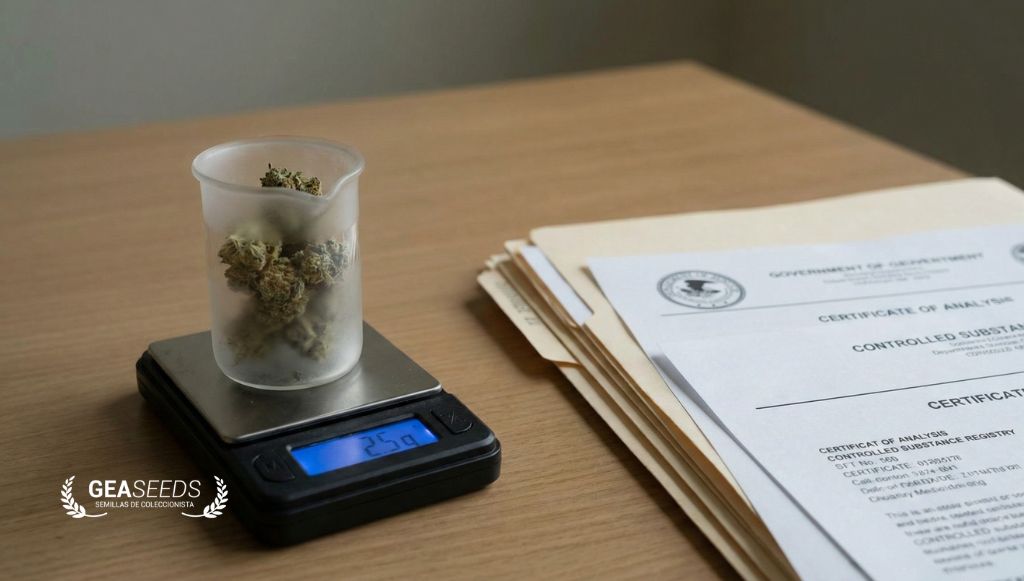
The law establishes clear thresholds to distinguish personal consumption from other situations. In general, an adult may:
- Possess and carry up to 25 g of dried cannabis.
- Store up to 50 g of dried cannabis in a private setting (residence or habitual place of living).
The official text also provides intermediate thresholds: for example, possession of more than 25 g and up to 30 g may be treated as an administrative offense (not necessarily a criminal one), while exceeding certain limits may lead to criminal consequences depending on the case.
Minimum age and responsible consumption
Legal consumption is restricted to adults. Protecting minors is one of the pillars of the law: for individuals under 18, possession, purchase, and cultivation for non-medical use remain prohibited, and the competent authority may seize and destroy any cannabis found.
In addition, Germany introduces restrictions on consumption in public spaces aimed at reducing minors’ exposure and preventing normalization in sensitive environments.
Restrictions on consumption in public spaces
Consumption is not permitted “anywhere.” Among the limitations set out in official information, the following stand out:
- Consumption is prohibited in the immediate proximity of minors under 18.
- Consumption is prohibited in pedestrian zones between 7:00 a.m. and 8:00 p.m..
- Consumption is prohibited in schools, childcare and youth centers, playgrounds, and publicly accessible sports facilities, as well as within their line of sight.
- Consumption is prohibited within cultivation associations and within the line of sight of their entrances.
Home cultivation: a structural change
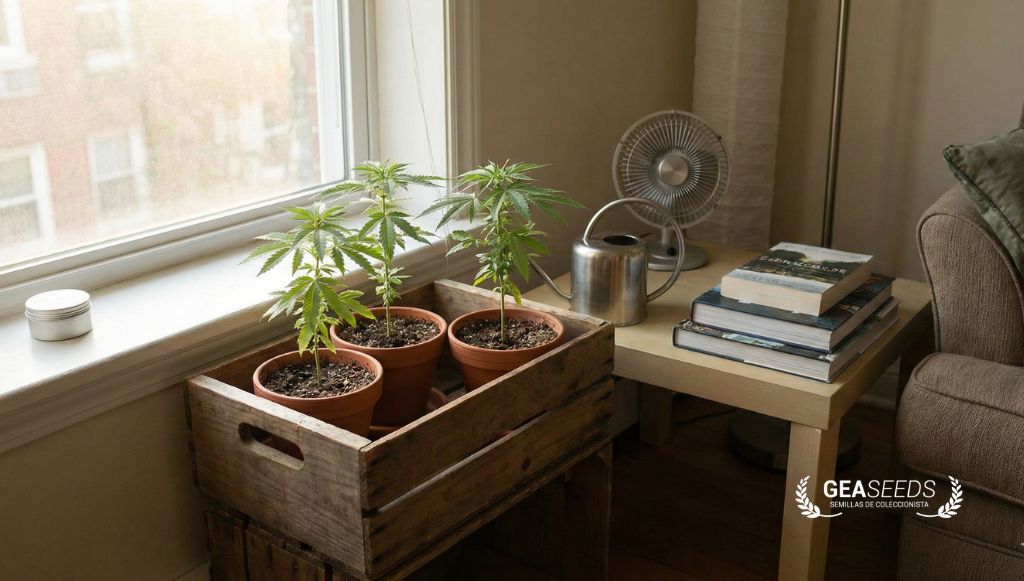
For the first time, Germany recognizes the right to home cultivation of cannabis for personal use. This step aims to reduce dependence on the illegal market and strengthen individual control and responsibility.
The law authorizes adults with residence or habitual stay in Germany (at least six months) to cultivate cannabis in their home or habitual residence, within specific limits.
- A maximum of three plants simultaneously per adult (applies to each adult in the household).
- Plants exceeding the limit must be destroyed without delay.
- Cannabis obtained through home cultivation is for personal use and may not be transferred to third parties.
Seeds and plant material: what is permitted
Official information clarifies a key point for home cultivation: seeds may be imported from EU countries for private cultivation purposes. Online purchases or distance sales and shipping to Germany are also considered permissible.
In addition, cultivation associations may provide limited plant material for private home cultivation:
- Up to 7 seeds or 5 cuttings per month for adults, including non-members, provided they originate from cooperative cultivation.
Cannabis associations: how they will operate
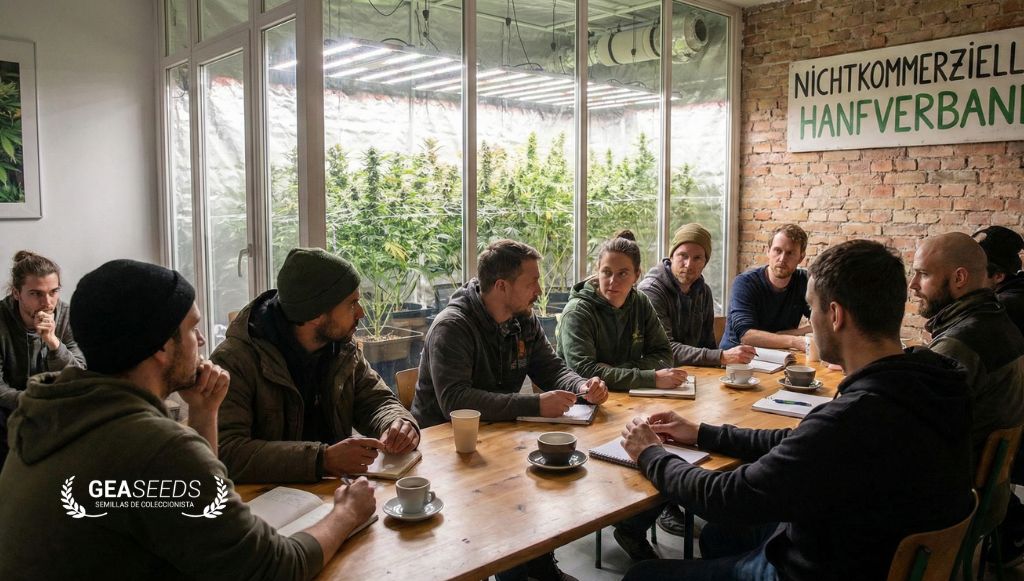
Cultivation associations (clubs) are registered, non-commercial entities whose purpose is cooperative cultivation and distribution to members for personal consumption, alongside prevention and information activities. They do not operate as retail stores, and their activity is subject to licensing and supervision.
Key requirements
- They require an official license (registering as an association or cooperative alone is not sufficient).
- A maximum of 500 members, all over 18 years of age.
- Members must have had residence or habitual stay in Germany for at least six months.
- A minimum membership duration of three months is required.
- A minimum distance of 200 meters from entrances to schools, childcare/youth centers, and playgrounds.
- Regional governments may limit the number of associations (for example, one per 6,000 inhabitants per district or city district).
Maximum quantities for members
Distribution to members is limited per day and per month, with additional protection for young adults:
- A maximum of 25 g per day and 50 g per month per member (adults).
- For members aged 18 to 21: a maximum of 30 g per month, with THC not exceeding 10%.
Prohibitions and internal controls
Associations operate under a strict framework of control, traceability, and prevention. Among the most relevant points are:
- They may only distribute cannabis in “pure” forms: flowers/leaves close to the flower or resin.
- It is prohibited to distribute cannabis mixed with tobacco/nicotine or food products (for example, “hash cookies”).
- It is prohibited to dispense alcohol or tobacco to members.
- Consumption inside associations is prohibited.
- It is prohibited to send or distribute cannabis to members; only in-person distribution is permitted (with very limited exceptions for internal transport between cultivation and distribution areas, under specific conditions).
- Mandatory documentation and reporting to ensure traceability and prevent diversion to the illegal market.
Public health and prevention: the rationale behind the law
The German Ministry of Health emphasizes that cannabis is not a harmless product: effects vary depending on the individual, dose, method of consumption, health status, and combined use. This approach aligns with other European regulatory frameworks focused on health protection, such as the regulation of medical cannabis in Spain. Possible acute adverse effects are mentioned (anxiety/panic, disorientation, slowed reaction, memory impairment, nausea, dizziness, hallucinations), as well as long-term risks, including dependence and potential mental health disorders in vulnerable individuals.
A particularly sensitive issue is youth: official information indicates that minors, adolescents, and young adults are more vulnerable and that the brain continues to mature until around the age of 25, which is why restrictions, limits, and educational measures are reinforced.
Evaluation and possible adjustments to the model
The law includes an evaluation framework with defined timelines. A first evaluation is expected 18 months after entry into force (focusing on youth protection and consumption patterns), an interim report after two years (including impacts on organized crime), and a more comprehensive final evaluation after four years. This reinforces the idea that the system is adaptive and may be adjusted based on evidence.
The evolution of cannabis legal in Germany will be closely monitored across Europe in the coming years.
European impact and the future of the German model
Germany’s decision is being closely watched across Europe, particularly in countries such as the Czech Republic, which is already moving toward its own cannabis law reform. Beyond the political debate, this regulated framework also creates economic expectations by facilitating the development of professional models within the legal cannabis industry. Its limited but structured approach, based on home cultivation and non-commercial associations, functions as a regulatory laboratory: if it reduces the illegal market without triggering public health problems, it may influence future reforms; if it fails, it will also set political limits for other countries.
In any case, the European debate shifts to a new level: the focus moves from “prohibit or allow” to designing systems that balance adult freedoms, youth protection, and public health, supported by real evaluation mechanisms.
Official Source: https://www.bundesgesundheitsministerium.de/en/themen/cannabis/faq-cannabis-act.html