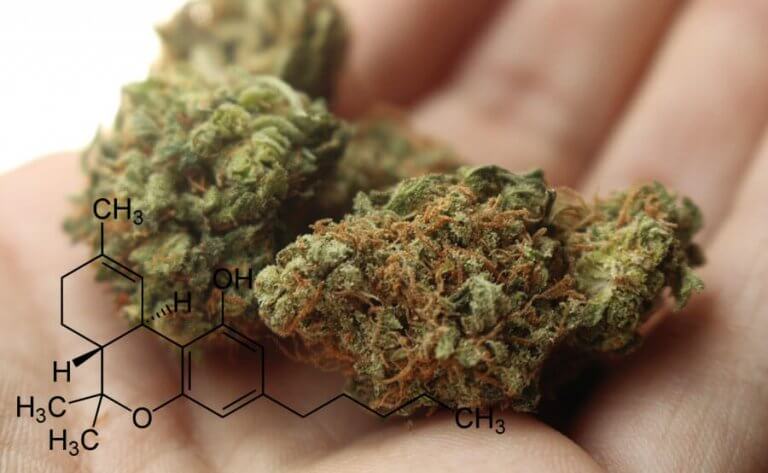
Medical marijuana is the one used for therapeutic treatments due to its beneficial properties. More and more studies are demonstrating the benefits of this plant for organisms suffering from various types of diseases.
One of the main problems with therapeutic marijuana is that, as a stigmatized and prohibited drug, not all the relevant studies have been carried out. Little by little, more research and evidence are emerging about the healing and palliative properties of cannabis, but many more studies are still needed to uncover all the possibilities that this famous plant offers us.

Some of the physiological responses produced by the activation of cannabinoid receptors, which can be used in the medical field, are as follows:
In this way, researchers have been able to carry out studies that demonstrate that the use of cannabinoids is an effective way to treat certain diseases and alleviate specific symptoms for which there is currently no truly effective pharmacological treatment. The more the possible medical applications of cannabinoids are studied, the broader the field becomes, although to date, there are certain therapeutic indications where a favorable effect of cannabinoids has already been confirmed:

Below we present a summarized and concise overview of some of the medical uses of marijuana and the diseases that can be treated with this plant.
Medical marijuana is ideal for treating epilepsy because it can reduce the convulsive seizures caused by this disease.
Parkinson’s causes chronic degeneration of the central nervous system, resulting in problems in brain areas responsible for movement control. Medical marijuana helps control spasms and reduces the problems caused by this disease.
Alzheimer’s causes the loss of cognitive ability in individuals. These issues are closely linked to the endocannabinoid system and, therefore, marijuana can help.
The spasms and cramps caused by sclerosis are drastically reduced with the use of medical marijuana.
The physical and vocal tics caused by this disorder are also reduced with the use of marijuana.
Crohn’s disease and ulcerative colitis are related to the inflammation of the intestinal tract, another issue that marijuana helps alleviate and reduce.
All of these problems can be reduced and controlled by consuming marijuana.
Migraines manifest as sharp head pain, vomiting, and light sensitivity. Because marijuana affects the perception of pain in the body, it also reduces the pain and discomfort caused by this condition and other related issues such as fibromyalgia or nausea.

Rheumatoid arthritis is a chronic inflammatory disease that affects multiple joints and can cause significant physical limitations. Marijuana use reduces these problems and helps patients better cope with the pain caused by the disease thanks to its anti-inflammatory effects.
The use of marijuana regulates different plasma concentrations of glucose and insulin, making it potentially very helpful for people with diabetes.
In this condition, the immune system mistakenly attacks healthy body tissues, producing antibodies against them. Cannabis is considered an adaptogenic herb, meaning it helps regulate the immune system and restore balance to our immune response.

Therapeutic cannabis is a field currently undergoing rapid development and is one of the main research focuses for many scientists due to the great medicinal potential attributed to cannabinoids.
It has been clearly demonstrated that the human body has two receptors activated by cannabinoids. These cannabinoids can be naturally produced by our own bodies (endocannabinoids) or come from the marijuana plant (phytocannabinoids).
The best-known phytocannabinoids are Delta-9-Tetrahydrocannabinol, commonly known as THC, and cannabidiol, or CBD, among others.

The activation of receptors by cannabinoids generates a series of physiological responses depending on which of the two receptors is activated—or if both are activated simultaneously—since each affects specific parts of the body.
Cannabinoid receptors primarily affect three human body systems: the neurotransmitter system, the immune system, and the endocrine system.
The central cannabinoid receptor, or CB1, is related to the central nervous system and also to the immune system, while the CB2 receptor is located peripherally and primarily affects the immune system and inflammation, though it is also present in the nervous system.
Spanish Society for Cannabinoid Research (SEIC). (2009). Update on the therapeutic potential of cannabinoids. 25/04/2017, from SEIC website: http://www.seic.es/wp-content/uploads/2013/10/actualizacion-potencial-terapeutico-cannab.pdf
Spanish Observatory of Medical Cannabis
International Association for Cannabis as Medicine (IACM)
Keep in mind that the lack of studies means more information is still needed before beginning treatments with marijuana. Consult your doctor before attempting to treat your illness with this plant, and test its effects gradually. Marijuana does not affect everyone in the same way; its effects depend on many varied factors, making it difficult to predict how it will act on each individual. The best way to understand how our body responds to marijuana use is to try it slowly and observe the results.
Product added:
Ak Auto